Episode overview
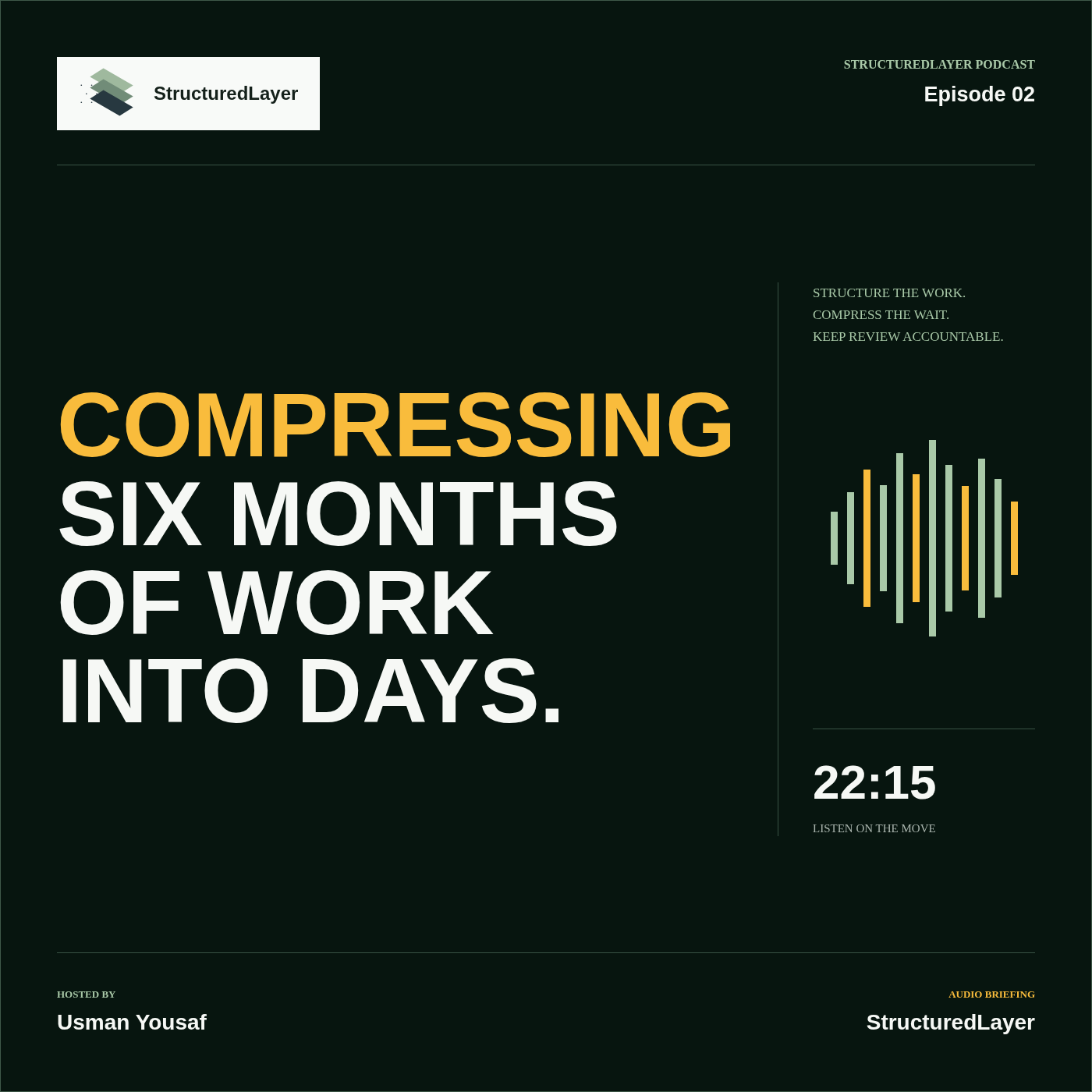
How do you take a project that typically requires six months of sequential human labor and execute it in just a couple of weeks? This audio briefing examines the operating question behind the "Multi-Agent Advantage." The emphasis is not merely on a universal productivity promise, but on fundamentally changing the architecture of the work: moving from limited-bandwidth human consulting to deploying orchestrations of 20-50+ specialized AI agents working in parallel.
When teams rely on single-threaded human labor, artificial bottlenecks are created—Task B cannot start until Task A finishes. Furthermore, teams waste up to 45 hours a week on manual AI research, tool evaluation, and basic integrations. An agent-powered architecture removes this friction by deploying specialized agents (like scrapers, analyzers, and integrators) simultaneously. This allows systems to run 24/7, continuously auto-updating and triggering alerts only when human action is genuinely required.
Questions behind the episode
- How much elapsed time is lost to sequential, linear delivery compared to automated, parallel agent workflows?
- What is required to transition from a manual "point-in-time" delivery model to a continuous 24/7 intelligence apparatus?
- How can specialized agents autonomously test tools, monitor competitors, and synthesize raw data into actionable insights?
- What does it take to architect an "impossible timeline," such as compressing six months of maritime fleet intelligence gathering into just two weeks?
- How can high-friction discovery phases be eliminated so that agents can begin building from just 5 minutes of human input?
A boundary on the title
"Compressing 6 months of work into days" is the framing of this episode, grounded in real-world deployment examples like fleet intelligence and real estate analyzers. It is not a guarantee that every business process can be compressed to this exact degree. Actual lead times depend on the specific architecture stack, whether it requires a 30-minute MVP or a full 7-day orchestration of 50 agents. While agents handle the heavy lifting of research, planning, and continuous operation, human oversight remains a designed part of the loop for when source tools change or specific alerts are triggered.
About the series
This audio series is based on the strategic briefings of Usman Yousaf, AI Automation Intelligence Partner at Bytespace.ai. The series focuses on multi-agent architectures, continuous intelligence systems, strategic AI deployment for startups and enterprises, and replacing manual operational bottlenecks with highly scalable, parallel-execution workflows.