AI readiness is an information and authority problem
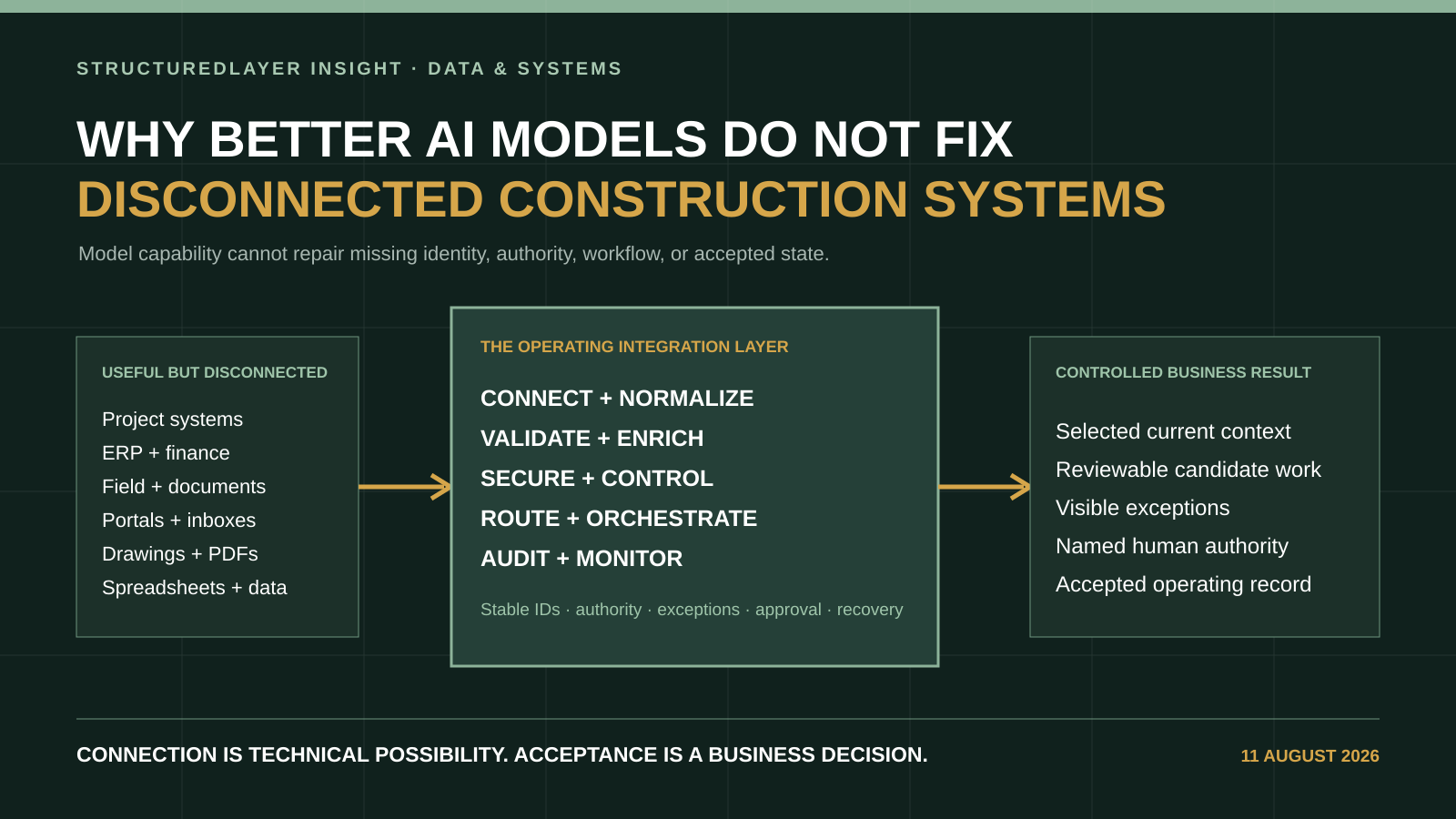
A capable model can still produce an unreliable result when it receives duplicate contracts, superseded drawings, conflicting project names, incomplete status, or information the user is not authorised to access. AI readiness begins before model selection.
The business must identify the records, sources, permissions, workflow decisions, and review obligations that control the requested use case.
Structure the business context
Construction information should connect through durable identities and relationships. A project can link to its company, contacts, RFQs, estimates, documents, revisions, activities, costs, changes, approvals, and outcomes.
Structured fields are especially important for exact values such as project number, date, currency, status, owner, revision, and approval state. Semantic retrieval can support relevant unstructured material, but it should not replace reliable filtering and exact lookup.
Useful metadata includes:
- Company, project, and document identifiers
- Document type and revision
- Current or superseded state
- Source system and retrieval time
- Author and responsible owner
- Permission and sensitivity category
- Effective and expiry dates
- Workflow and approval status
Define source authority
When two sources disagree, the system needs a rule or accountable owner for determining which value controls the workflow. Preserve both source values and the reconciliation history where the difference matters.
A citation should identify the record, document, revision, date, page, section, or source link used for an answer. Citations improve inspection, but they do not prove that the source itself is correct or current.
Enforce permissions before retrieval
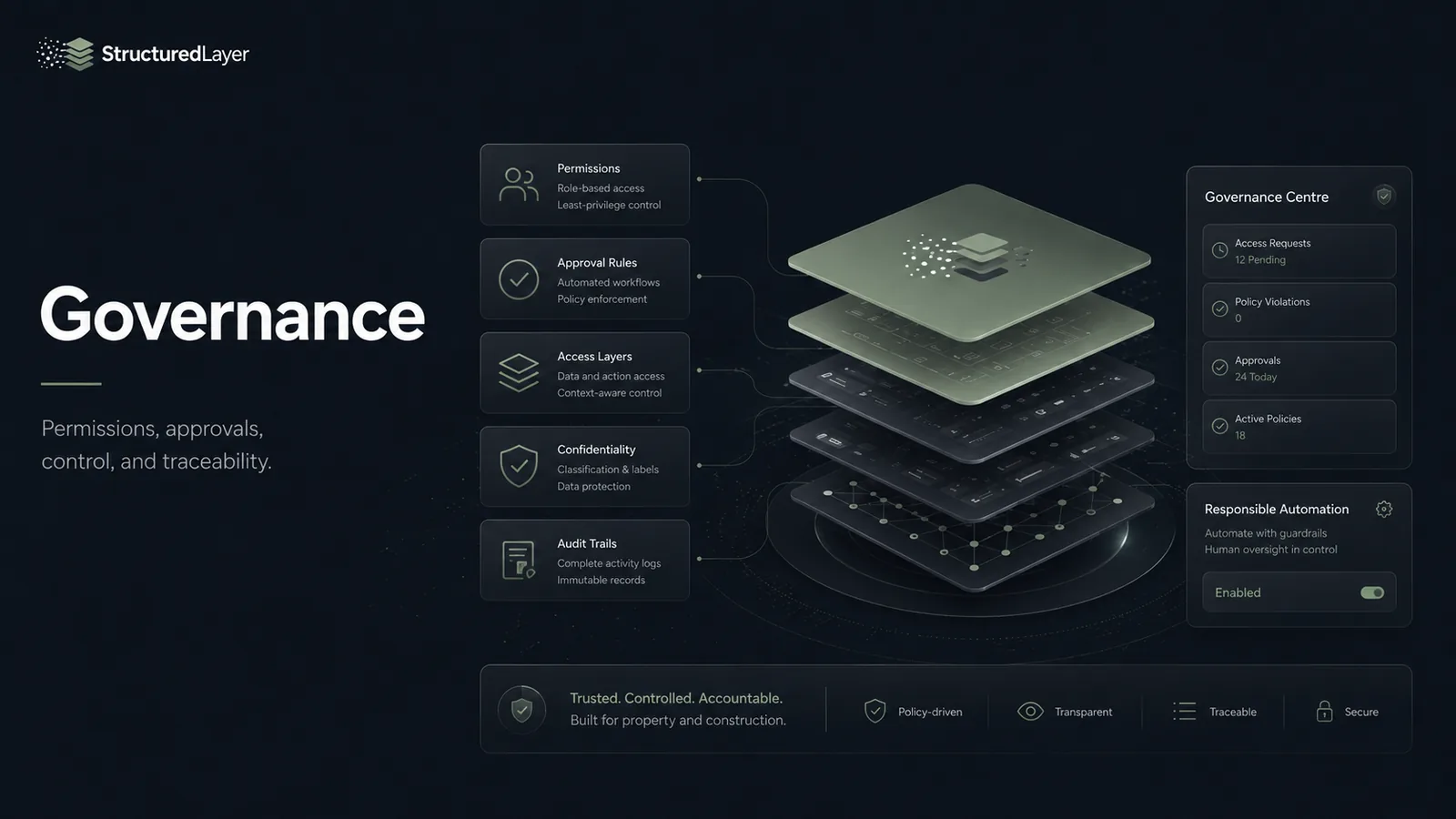
Filter the available context by user, role, project, geography, sensitivity, contractual restriction, and business purpose before information reaches the model. Least privilege applies to people, integrations, retrieval systems, and AI tools.
The provider, model, region, storage, logging, retention, training settings, and deletion behavior should be reviewed for the data involved. Using data for a permitted request is different from approving provider retention or future model training.
Keep retrieval focused
Do not send an entire project folder when the question requires one current field and two approved document sections. Focused retrieval can reduce irrelevant context and verification work while improving traceability. Actual cost or accuracy improvement must still be measured for the selected architecture and use case.
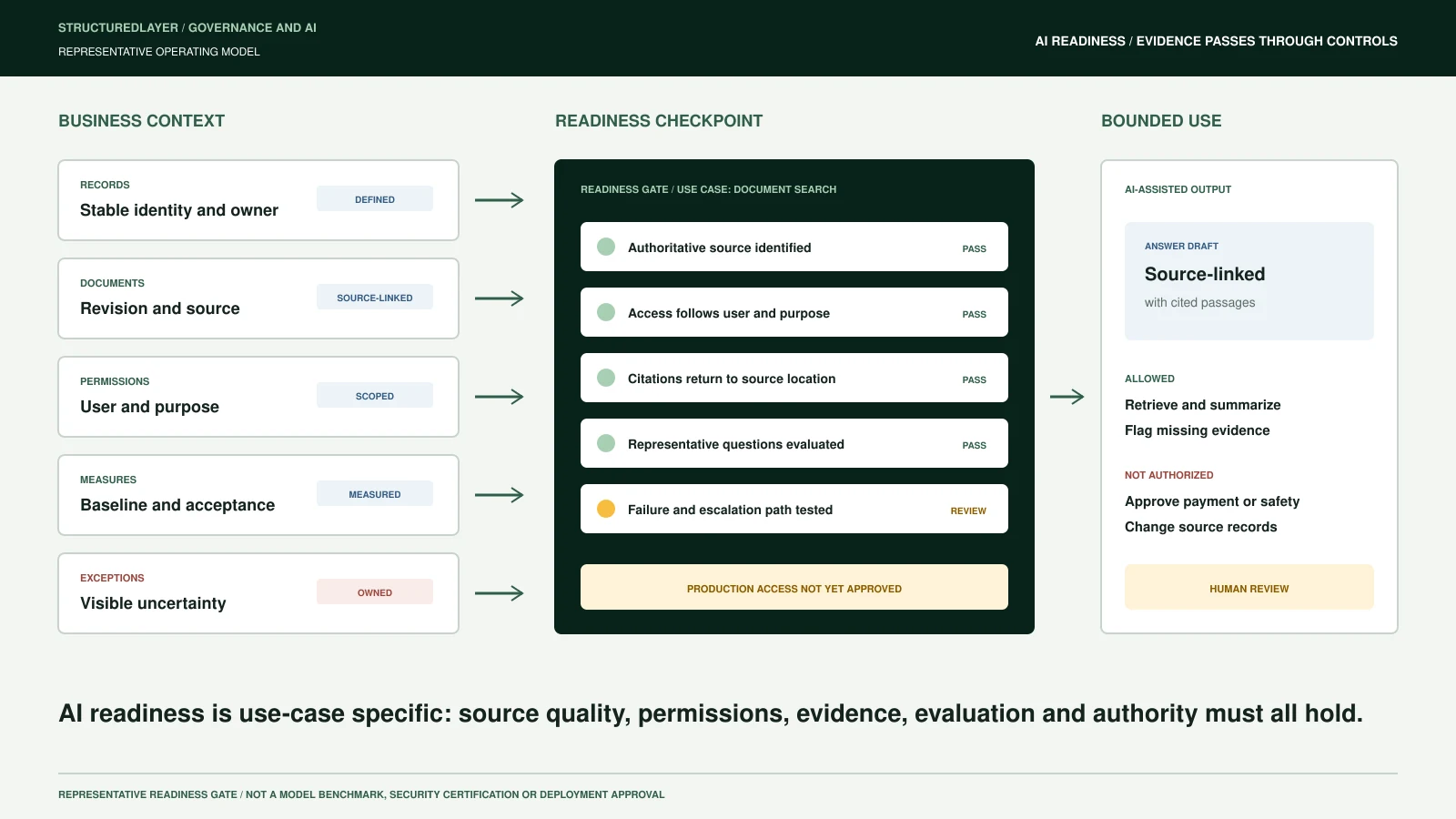
A controlled retrieval path can follow this sequence:
- Confirm the authorised business question.
- Apply identity, date, status, and permission filters.
- Retrieve the minimum relevant structured fields and document sections.
- Preserve source citations and retrieval details.
- Generate a bounded answer or draft.
- Evaluate the output against expected evidence and failure cases.
- Route consequential use to an accountable reviewer.
Establish human approval boundaries
Pricing, contracts, payments, bids, external submissions, sensitive communication, deletion, access changes, and high-consequence legal, safety, employment, insurance, or compliance decisions should normally remain under accountable human authority.
The system can prepare information, draft text, identify missing evidence, and suggest next steps. It should not imply that a generated output is approved or professionally verified.
Evaluate before production
Build an evaluation set from authorised representative examples, including normal cases, ambiguous questions, missing sources, conflicting evidence, restricted records, outdated documents, and expected refusals.
Measure retrieval relevance, citation accuracy, unsupported statements, permission enforcement, reviewer agreement, failure handling, and operational usefulness. Monitor provider and source changes after deployment.
Design for traceability and handover
Document the sources, preprocessing, identifiers, permissions, retrieval rules, model and provider, prompts, tool actions, evaluation set, known limitations, monitoring, disable procedure, retention, and responsible owners.
Client ownership requires enough documentation and access for the organisation to inspect, operate, change, or disable the implementation.
Readiness before automation
Start with one bounded question and the evidence required to answer it. Map the records, current sources, permissions, citations, approval boundary, and failure cases. Then use the AI readiness guide, governance controls, and data ingestion pipeline to decide whether the use case is ready for implementation.