RFQ work crosses more systems than it appears to
An invitation may begin in a bid portal, inbox, referral, spreadsheet, or uploaded package. Before it becomes a reliable estimating opportunity, the business needs to know which company and project it belongs to, whether it is a duplicate, which documents are current, who owns the response, and which dates control the work.
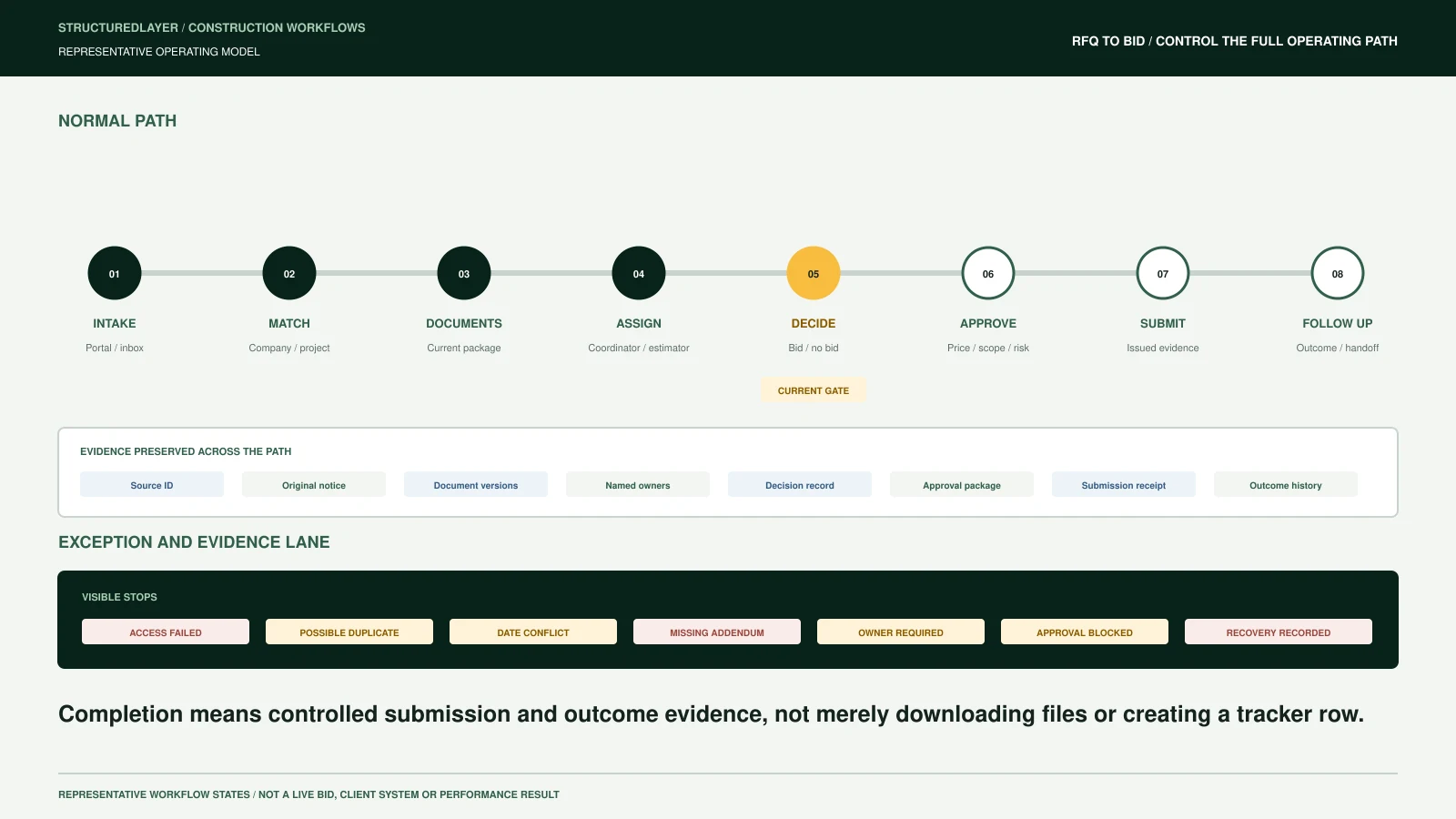
A controlled RFQ-to-bid workflow carries that context from intake to outcome. It does not treat downloading documents or creating a spreadsheet row as completion.
1. Authorised portal and inbox intake
Use the strongest supported connection available. A documented API, webhook, or export is preferable. Approved reports, inbox rules, folders, or controlled browser steps may be considered when a supported interface does not meet the requirement.
Each captured opportunity should retain source evidence:
- Portal or source identifier
- Source URL or message reference
- Received and retrieval time
- Original notice and attachments
- Authorised account or process
- Retrieval and validation result
Failed access, changed layouts, missing files, and uncertain extraction should become visible exceptions.
2. Duplicate and identity checks
Before creating another opportunity, compare the issuing company, project, package, location, reference number, due date, and attached documents. A possible match should be reviewed rather than forced into an existing record or silently duplicated.
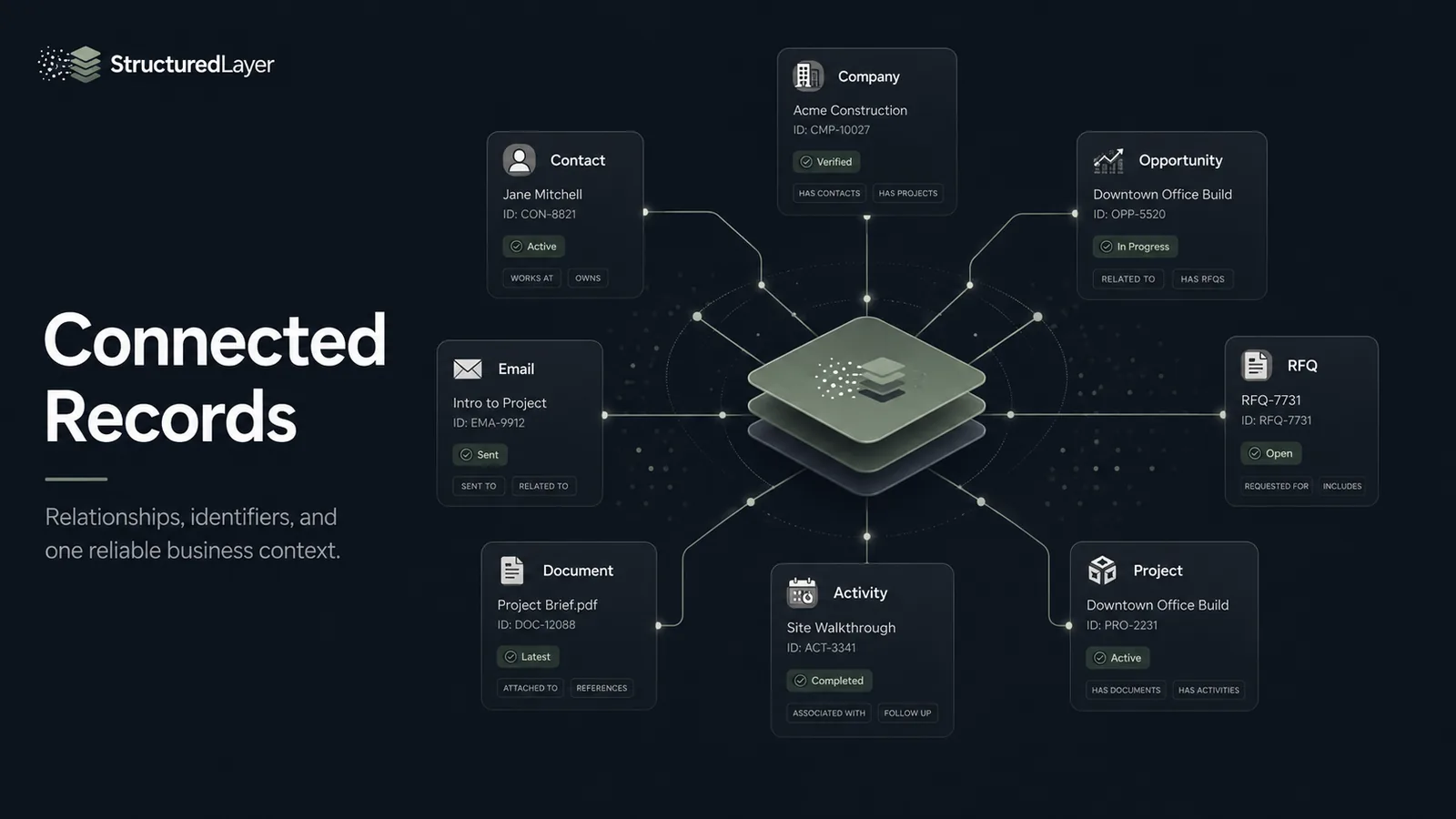
Durable identifiers connect the RFQ to company, contact, project, document, estimate, submission, and outcome records. Native system IDs remain available for reconciliation and round-tripping.
3. Document and revision control
Classify invitations, instructions, drawings, specifications, addenda, forms, correspondence, and supporting evidence. Preserve the original file and identify its project, type, issue, revision, source, and current or superseded state.
A new addendum should be able to identify the affected opportunity and estimate. Conflicting dates or document issues should block dependent actions until the responsible person confirms the controlling source.
4. Estimator handoff
The estimator-facing view should bring together:
- Current document register
- Bid and clarification dates
- Walkthrough and submission requirements
- Matched company and project context
- Named coordinator and estimator
- Extracted fields with source locations
- Missing information and conflicts
- Review checklist and acknowledgement
Extraction and generated summaries remain drafts until the estimator validates the source material. The system can prepare context; it cannot make scope, pricing, risk, or professional judgement reliable by itself.
5. Review and submission control
Define the people authorised to confirm scope, assumptions, exclusions, price, commercial risk, and issue readiness. External submission remains blocked until required approvals are complete.
The issued record should preserve the approved version, recipient, delivery channel, timestamp, confirmation, and supporting package. This provides evidence of what was actually submitted rather than relying on memory or an inbox search.
6. Follow-up and outcome
A submitted bid still needs a named next action, due date, contact, and escalation path. Capture clarification, feedback, decision, reason, value, and downstream handoff where known. Do not silently close opportunities because an outcome has not yet been received.
Historical participation can support a reviewable outreach queue, but inferred trade, region, contact, and suitability should not be treated as verified fact. Contact enrichment, ranking, and draft messages require authorised review before external use.
7. Reporting from workflow state
Useful measures can include pipeline by stage, estimator workload, due-date ageing, unresolved exceptions, submission readiness, on-time issue, follow-up state, outcome, and handoff status. Each measure should drill through to the records that produced it.
Measure improvement against a documented baseline. Candidate measures include preparation effort, missing information, exception age, handoff reliability, and reporting timeliness. Avoid publishing a universal savings or conversion percentage without observed client evidence.
Build the controlled path first
A strong implementation begins with the real sources, records, owners, approval rules, exceptions, and acceptance evidence. Review the detailed RFQ-to-bid workflow, the bid portal ingestion pattern, and the RFQ readiness assessment before selecting automation.