
Construction Workflows
Construction Change Orders: Connect the Instruction to the Approved Cost and Time
A controlled construction change workflow connects the initiating instruction, affected scope, evidence, estimate, schedule effect, review, authorization, and downstream records without treating a request as an approved change.
StructuredLayer · 2026-11-16 · 8 min read
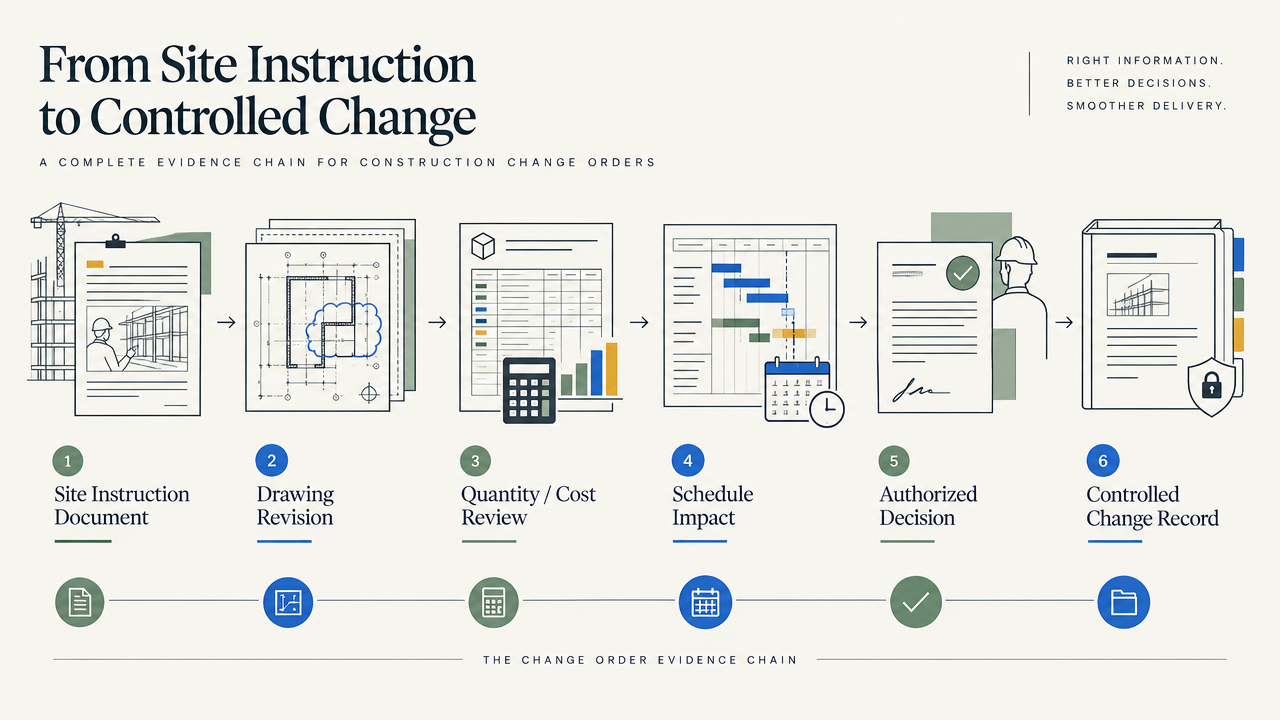
Change exposure often grows in the gaps between a field instruction, a revised drawing, a cost proposal, a programme update, and the formal decision. A reliable workflow makes those relationships visible while preserving the authority of the people responsible for commercial and contractual decisions.
A change request is not an approved change
Teams use words such as change, variation, instruction, and potential change differently across contracts and organizations. The system should preserve the source wording and the client-defined status instead of collapsing every item into a single approved state.
A received instruction can trigger review without establishing entitlement, price, time, or authorization. Record who issued it, under which authority, when it was received, what work it appears to affect, and which contract or project procedure governs the next step.
Build an evidence chain around scope
Give each potential change a stable identifier and connect it to the affected project, package, location, drawing and revision, instruction, correspondence, estimate, schedule activity, procurement item, and decision. Keep original files and source-system identifiers; titles and filenames alone are not dependable keys.
Record the quantity basis, inclusions, exclusions, rates, assumptions, quotations, labour and equipment basis, and unresolved information. Link each calculation to its source and revision so a reviewer can reproduce what was considered.
Review cost and time without conflating them
Cost review and schedule review may share the same initiating event but require different evidence and decision owners. Track the affected work, logic relationships, assumptions, mitigation options, and confidence separately. A quotation or proposed duration does not itself establish a contract adjustment.
Capture review comments, returned submissions, superseded versions, and the final decision with its author, date, authority, conditions, and source. Downstream budgets and forecasts should change only through the approved process, while pending exposure remains visible in its appropriate status.
Make exceptions and deadlines actionable
Route missing scope, conflicting revisions, late responses, duplicate submissions, unsupported quantities, and unclear authority to a named owner with a due date. Preserve the original event date and the applicable notice or response deadline as defined by authorized project personnel.
Automation can detect missing fields, compare revisions, prepare a candidate scope summary, and assemble evidence. It must not issue notices, accept commercial positions, or change approved values without explicit authorization and an auditable action.
A practical starting point
Pilot one recurring change type. Map its contract-defined statuses, source records, cost and time reviewers, authorization points, exception owners, and approved downstream updates. Test a normal case, a rejected case, a superseded revision, and a late or incomplete submission before release.