
Construction Workflows
Construction Schedule Updates: Keep Progress, Logic, and Forecasts Traceable
A dependable construction schedule update preserves the approved baseline, dated progress evidence, logic changes, constraints, review decisions, and issued forecast as separate but connected records.
StructuredLayer · 2026-11-16 · 8 min read
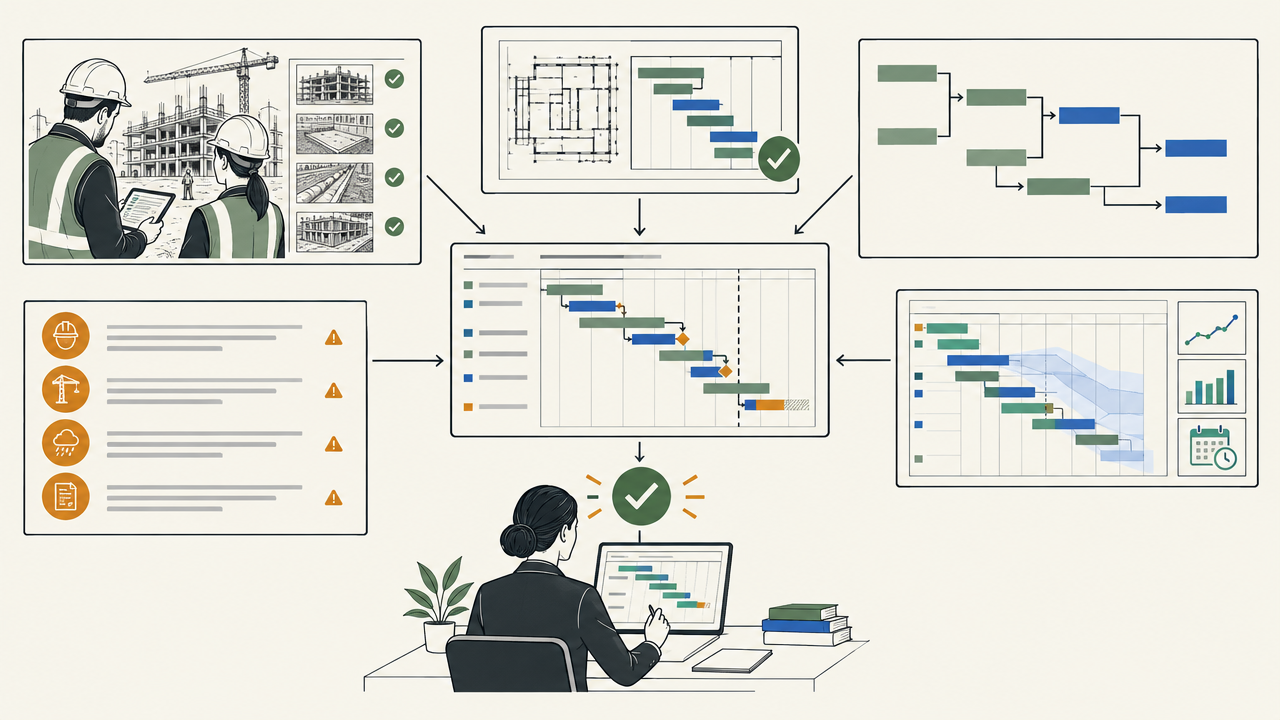
A schedule status date can look precise while the underlying progress, logic, and assumptions remain unclear. Better schedule control connects field evidence to activities and relationships, records what changed, and keeps the approved baseline distinct from each current forecast.
Keep baseline and forecast distinct
The baseline is the approved reference for measuring performance under the project’s governing controls. A forecast represents the current view of likely completion based on known progress, logic, constraints, and assumptions. Updating the forecast must not silently rewrite the baseline.
Store baseline versions, approval dates, status dates, update identifiers, calendars, and the method used to produce each issue. A later rebaseline requires its own authority and decision history; it is not a cosmetic correction to poor performance.
Connect reported progress to evidence
For each activity, capture the source of actual starts, finishes, quantities, installed work, remaining duration, and percent complete according to the approved measurement rules. Link field reports, inspections, delivery records, quantities, or responsible-party confirmations to the relevant activity and period.
Distinguish observed facts from estimates and forecasts. Partial completion, out-of-sequence work, missing evidence, and disputed status need explicit treatment rather than an unsupported percentage copied forward.
Inspect logic changes and constraints
A date movement can result from progress, changed logic, calendars, constraints, resource assumptions, added scope, or a correction. Preserve the before-and-after relationships and the reason for each material edit so reviewers can distinguish an actual change in the plan from a data repair.
Identify the activities driving key milestones, external dependencies, procurement dates, access limits, approvals, and unresolved interfaces. A critical-path result is only as useful as the logic and status data behind it.
Issue a reviewable update
The update package should identify the status date, data sources, exclusions, unresolved items, logic changes, variance explanation, mitigation proposals, and decisions required. Route exceptions such as unsupported actuals or conflicting reports to accountable owners before the update is accepted.
Automation can compare periods, flag missing evidence, identify changed relationships, and draft variance explanations. A qualified planner and authorized project representatives remain responsible for schedule interpretation, acceptance, contractual notices, and recovery commitments.
A practical starting point
Choose one reporting period and test a schedule update from source evidence through planner review and issue. Confirm that the baseline cannot be overwritten, every material logic change has a reason and owner, and unresolved progress remains visible rather than being presented as fact.